Kitchen Design & Organization
Aching back after Sunday lunch? Sore shoulders from a long prep session? That’s not age — it’s usually counter height, floor surface, and where you put the heavy pans.
Professional cooks talk about their bodies the way athletes do, and for the same reason: the work is physical, repetitive, and performed for hours at a stretch. Chronic back trouble, wrist and shoulder problems, and sheer standing fatigue are occupational realities of the trade, and the industry has spent decades learning which design and habit changes actually help. Home cooks rarely think in these terms at all — but anyone who has hosted a large dinner and woken up the next day with an aching lower back has run into exactly the same physics, just less often.
Kitchen ergonomics is the discipline of fitting the space to the body rather than expecting the body to adapt to a standardized box. It matters for anyone who cooks regularly, and it matters enormously for older cooks, people with arthritis or back conditions, people with limited reach or grip strength, and anyone who spends serious hours at the counter. Better still, most of the meaningful improvements are cheap or free: a board at a different height, a mat underfoot, heavy items moved out of the low cupboard, a stool to sit on. General workplace guidance on ergonomics and musculoskeletal strain from bodies like the Occupational Safety and Health Administration translates directly, because a domestic kitchen is a workspace whether or not anyone is being paid.
Counter height: the single biggest factor
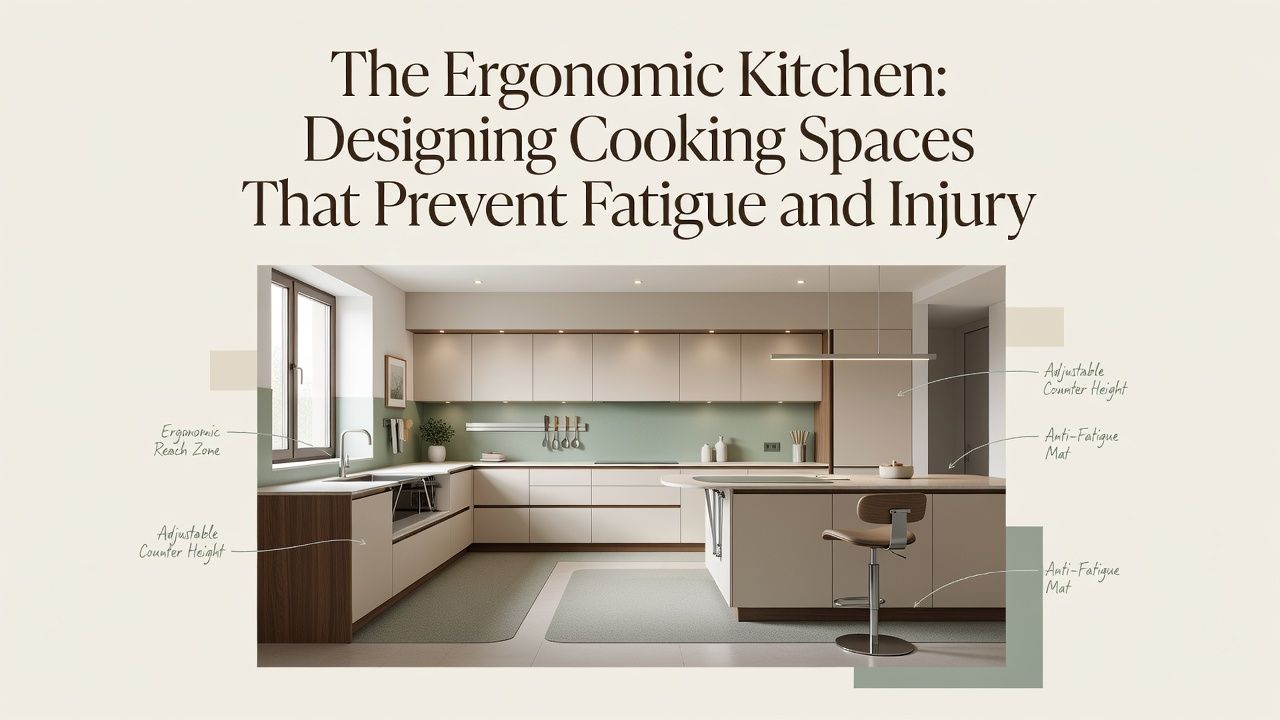
Standard kitchen counters are built to a single height, chosen as an average, which means they are wrong for most individual people — too low for taller cooks, too high for shorter ones. The consequences are entirely predictable. A counter that’s too low forces you to hunch forward, loading the lower back over long prep sessions. A counter that’s too high forces the shoulders up toward the ears, causing shoulder and neck strain and robbing you of the ability to put body weight behind a knife.
The useful rule of thumb is that for chopping and general prep, the working surface — meaning the top of the cutting board, not the counter itself — should sit at roughly wrist height when you stand relaxed with arms at your sides, or a little below. That position lets you keep your shoulders down, elbows near your body, and back straight while still being able to press down with body weight rather than muscling everything from the wrist. Test it honestly: stand at your counter, put your hands where they’d be while chopping, and notice whether your shoulders creep up or your spine curves forward.
Fixing it needn’t mean rebuilding cabinetry. If your counter is too high, cut on a board placed on a lower surface — a pull-out board, a sturdy trolley, or a kitchen table — or sit on a tall stool for long prep sessions. If it’s too low, a thick butcher’s block or a board raised on a stable riser lifts the work surface several centimetres for a few pounds. If you are renovating, varying counter heights across zones is genuinely worth doing: a slightly lower section for tasks that need downward force (kneading, chopping), a standard height for general work, and possibly a higher section for tall household members. Design guidance covering clearances, reach ranges, and universal design from bodies like the National Kitchen & Bath Association is a useful reference at the planning stage.
| Symptom | Likely cause | Cheap fix |
|---|---|---|
| Lower back ache after prep | Counter too low; hunching forward | Raise the board on a stable riser or block |
| Sore neck and shoulders | Counter too high; shoulders elevated | Work at a lower surface or sit on a stool |
| Feet and legs aching | Hard floor, long standing, poor shoes | Anti-fatigue mat + supportive footwear |
| Wrist pain | Dull knives; wrist-driven cutting; heavy lids | Sharpen knives; cut from the elbow |
| Strain lifting cookware | Heavy pots stored low or overhead | Rehome heavy items to waist height |
| Eye strain, squinting | Single ceiling light casting shadows | Under-cabinet LED task lighting |
Standing, floors, and shoes
Standing still on a hard surface is more punishing than walking, because static loading compresses the same structures continuously with no muscular pumping to relieve it. Kitchen floors are almost universally hard — tile, stone, laminate, concrete — which is why professional kitchens issue anti-fatigue matting as standard and why cooks are notoriously particular about their shoes. This is the least glamorous ergonomic intervention available and one of the most effective.
An anti-fatigue mat at the prep counter and another at the sink costs very little and makes a genuinely noticeable difference across a long cooking session, because the slight give encourages continuous micro-adjustments in the legs rather than static loading. Supportive, cushioned, closed-toe shoes matter equally — cooking barefoot or in flat unsupportive slippers on tile is a reliable route to sore feet and lower back, quite apart from the obvious hazards of dropped knives and spills. Shift your weight periodically, use a low footrest to alternate which foot is raised (a trick borrowed from bar rails, which exist partly for this reason), and take short breaks to walk around during long sessions.
Sitting is allowed
There is no rule that prep must be done standing. A tall stool at the counter, or simply prepping at the kitchen table, transforms long sessions for anyone with back, hip, or knee issues — and for everyone else too. Professional kitchens stand because they’re moving constantly between stations. You are not.
Reach zones: put heavy things where your hands already are
Ergonomics divides the space around a standing person into zones. The comfortable band runs roughly between hip and shoulder height and within an arm’s length — anything here can be retrieved without bending, stretching, or twisting. Below the knees and above the shoulders are the awkward zones, requiring squats, tiptoes, or overhead lifts. The principle is simple and widely ignored: heavy and frequently used items belong in the comfortable band; light and rarely used items go to the extremes.
Most kitchens have this exactly backwards. The cast-iron casserole and the stack of heavy pans sit in a low cupboard, requiring a deep squat and an awkward lift from a bent position — the classic mechanism for a back injury. The rarely used salad bowls sit at eye level. Meanwhile heavy appliances are stored on high shelves, so retrieving them means lifting weight down from above shoulder height with arms extended, which is one of the most mechanically disadvantaged movements the body can perform. Simply relocating your heaviest cookware to waist-height drawers or shelves, and moving light bulky items to the high shelves, addresses this in an afternoon.
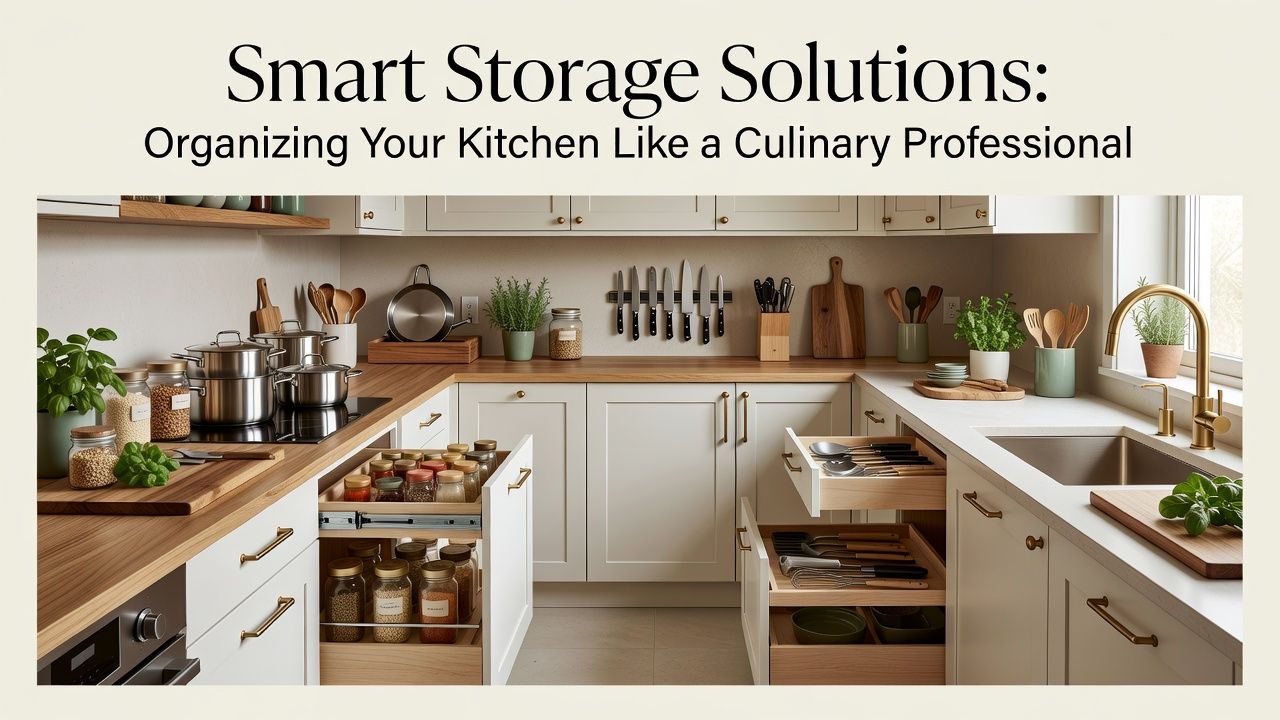
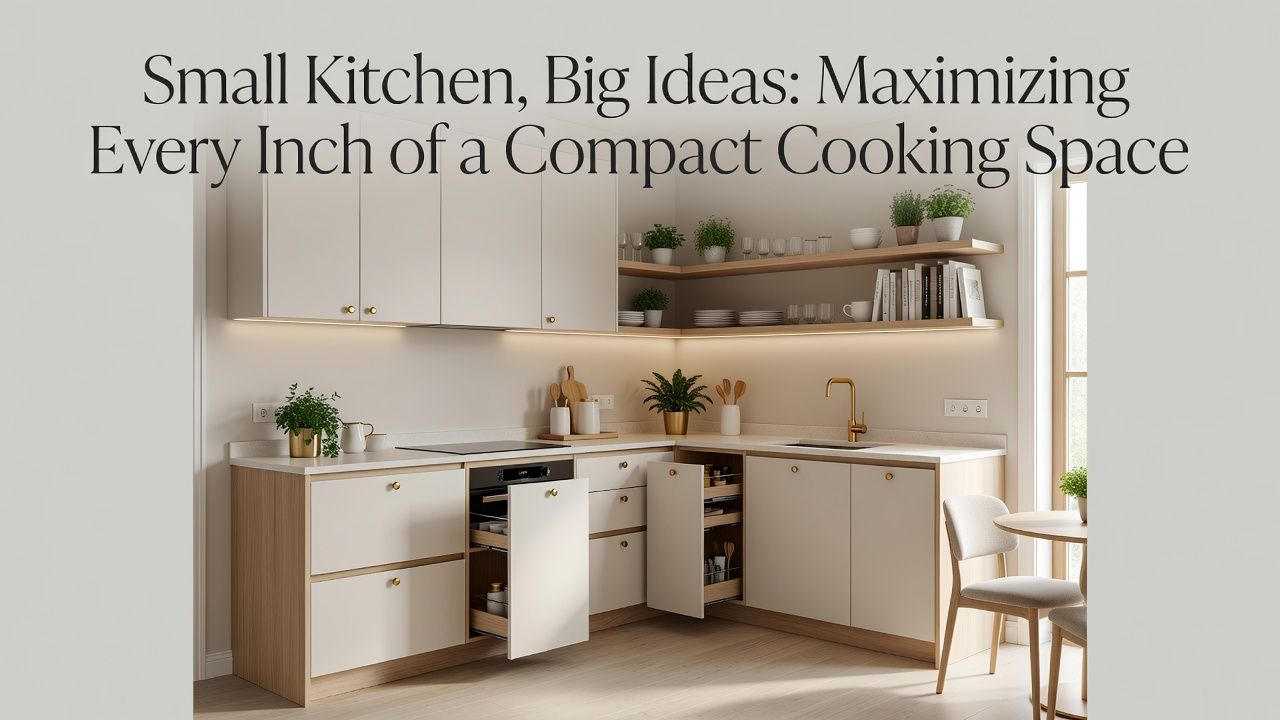
Where you can’t avoid low storage, deep drawers on full-extension runners are vastly better than cupboards, because the contents come to you rather than requiring you to crawl in after them. Pull-out shelves, pull-out pantry units, and corner carousels do the same job. And when you do lift something heavy, use the technique that gets repeated for good reason: get close to the load, bend the knees rather than the back, keep the object near your body, and turn with your feet instead of twisting your spine.
Tools, grip, and repetitive strain
Equipment choices have real ergonomic consequences, particularly for hands and wrists. Knives are the clearest case: a sharp knife requires a fraction of the force of a dull one, which means a sharp knife is not only safer but substantially kinder to your wrist over years of cooking. Handle shape and blade weight matter too — a knife that suits your hand size lets you use a relaxed pinch grip rather than a clenched fist, and the difference over a long prep session is considerable.
Look for the same qualities across the rest of the kit. Cushioned, non-slip, adequately thick handles on peelers, spatulas, and utensils reduce grip force, which is precisely what people with arthritis or reduced hand strength need. Lightweight pans are easier on the wrists than heavy ones, and pans with a helper handle on the opposite side let you lift with two hands instead of cantilevering weight off one wrist — a small feature that transforms handling a full casserole. Lever-action can openers, jar openers, and electric alternatives are practical rather than indulgent for anyone with grip limitations.
Technique matters as much as equipment. Cut using motion from the shoulder and elbow rather than flicking from the wrist; keep wrists in a neutral, straight position rather than bent; alternate tasks so you’re not doing the same repetitive motion for an hour straight; and take short breaks with a few gentle stretches during long sessions. Repetitive strain develops gradually and quietly, which is why prevention is far easier than treatment. Practical information on musculoskeletal disorders and repetitive-motion injury is available from the Centers for Disease Control and Prevention, and persistent or worsening pain is something to discuss with a qualified healthcare professional rather than work through.
Lighting, safety, and designing for every age
Lighting is an ergonomic issue and is consistently the most neglected element in domestic kitchens. A single overhead fixture places your own shadow directly onto the cutting board, forcing you to lean and squint — a posture problem and a safety problem simultaneously. Under-cabinet task lighting over prep areas, good light at the hob and sink, and adequate ambient light throughout solve it, and adhesive LED strips make this a cheap, renter-friendly upgrade. This matters increasingly with age, as the amount of light required for the same visual task rises substantially over the decades.
| Design feature | Who it helps |
|---|---|
| Drawers instead of low cupboards | Everyone; especially limited mobility or back issues |
| D-shaped or bar pulls, lever taps | Arthritis, reduced grip, wet hands |
| Varied counter heights | Households of differing heights; seated cooks |
| Wall oven at chest height | Anyone lifting hot heavy trays |
| Front-mounted hob controls | Avoids reaching across hot burners |
| Non-slip flooring & good lighting | Everyone; critical for older cooks |
This is where ergonomics merges with what designers call universal design — designing so a space works for people of different ages, sizes, and abilities without special adaptation. A wall oven mounted at chest height rather than under the counter means never lifting a heavy roasting tray from floor level. Front-mounted hob controls mean never reaching across hot pans. Lever taps work with an elbow when your hands are full or messy. Non-slip flooring reduces fall risk, which is the most consequential kitchen hazard for older adults. None of these compromise the kitchen for anyone; they simply make it work for more people, including your own future self.
If you take one thing from this, make it the audit. Cook a normal meal and pay deliberate attention to your body: where do you bend, stretch, twist, squat, or squint? Which cupboard makes you groan? Where do you feel it the next morning? Then fix the top three, cheaply — move the heavy pans up to waist height, put a mat down, raise or lower your cutting surface, add a light over the board. Cooking should leave you tired in the satisfied way, not aching. For most kitchens, that’s a Saturday’s work and a few small purchases away.